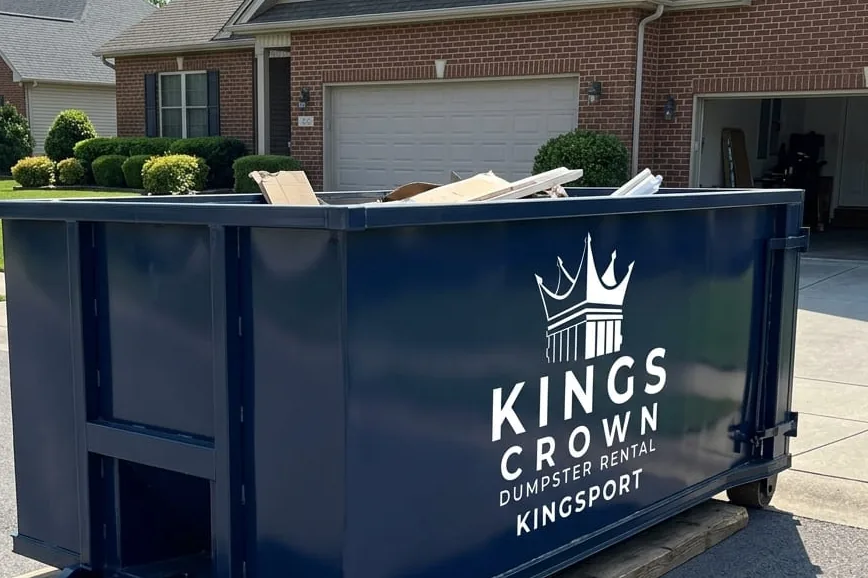

Dumpster Rental Cost in Kingsport TN: How Pricing Works
A roll-off has no shelf price. Here is how Kingsport dumpster pricing is actually built, what a true flat rate includes, and how to compare quotes without getting caught by weight overage.
ReadKingsport, TN guide
Volume gets the attention, but tonnage decides your size and your bill. A Kingsport-specific guide to 10 through 40-yard roll-offs, the materials that blow a weight allowance, and whether a 30 will even fit up your driveway.
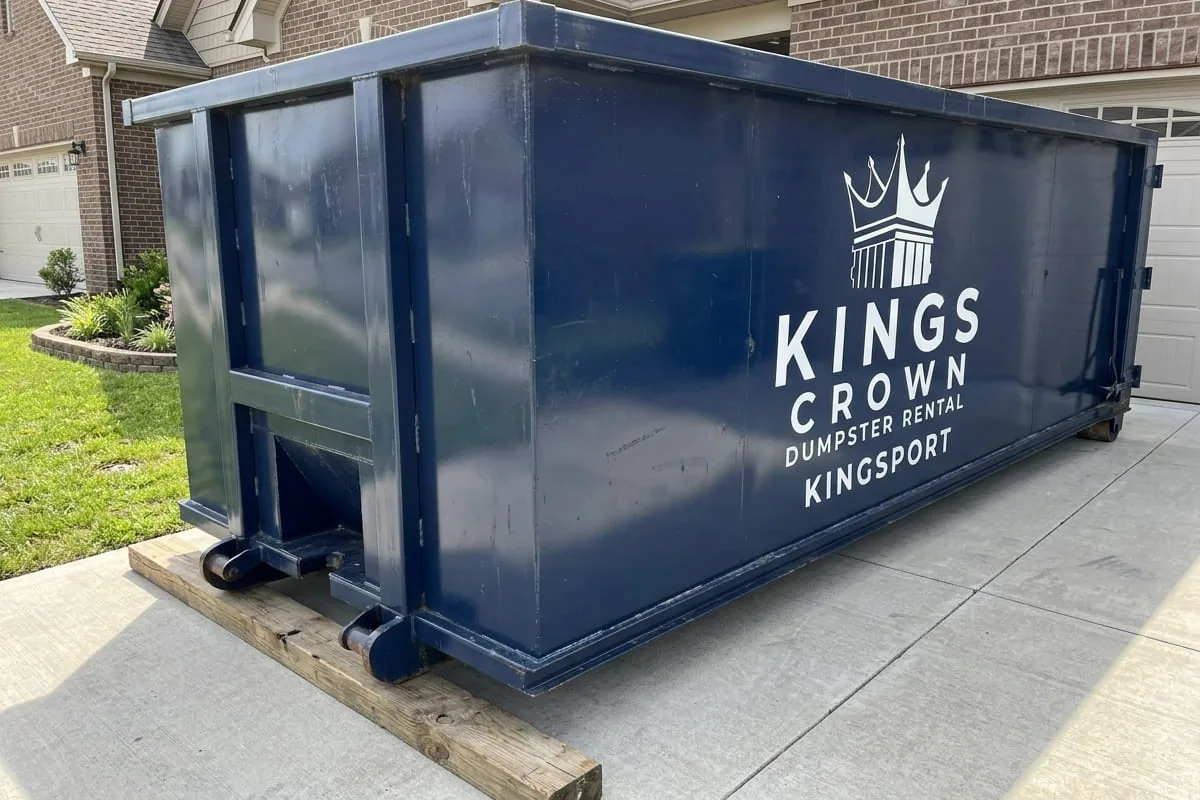
Almost every call that begins with "what size dumpster do I need?" is really two questions wearing one coat. The first is about volume: will my stuff physically fit inside the box? The second — the one that actually decides your final bill and whether the truck can legally pull off your property — is about weight. A roll-off is not a bottomless bag. It is a steel container riding on a truck with axle limits, and those limits are measured in tons, not cubic yards.
This guide is written for the ground we actually work: Kingsport, the rest of Sullivan County, Hawkins County and the wider Tri-Cities. That means planned-city neighborhoods full of plaster-and-lath walls, ranch houses at the top of long gravel drives, red clay that turns to pudding after three wet days, mature hardwood that comes down in ice storms, and hillside approaches no 22-foot container will ever reach. Below is how to choose a size that fits both your debris and your address. If you would rather just talk it through, call Kings Crown Dumpster Rental at (423) 830-4153.
Every roll-off rental carries an included tonnage allowance — a weight of material the quoted price covers. When the loaded container crosses a certified scale on the way to disposal, that ticket is the number that matters. Go over the allowance and you pay an overage on the excess. Stay under it and the tonnage you didn't use is simply headroom you never needed.
This is why "how big is the pile?" is the wrong opening question. Two containers can be filled to the identical line and weigh four times differently depending on what went in. A 20-yard box packed to the rails with sofas, drywall offcuts, closet junk and cardboard may weigh under two tons. The same 20-yard box filled a third of the way with tear-off shingles can be heavier. Match the size to the density of your debris first, then check that the volume works.
The most useful way to picture container volume is in full-size pickup loads, heaped level with the bed rails. A 10-yard holds roughly three of those loads; a 20-yard, about six; a 40-yard, about twelve. Walk your project and count honestly in truckloads, then add a load for the things you always forget: baseboard, shelving, the old grill, the half-empty paint shelf.
The model breaks the moment your debris is heavy. Nobody hauls a pickup bed full of wet concrete, so nobody has an instinct for what it weighs. Three pickup loads of household clutter is a comfortable 10-yard rental. Three pickup loads of broken sidewalk is several tons and needs a container rated and dispatched for it. Use truckloads to sanity-check volume, and use the material itself to decide tonnage.
These are our own containers and their real dimensions. Full specifications for each live on the dumpster sizes pages.
| Size | Dimensions (L x W x H) | Included tonnage | Typical projects | Watch out for |
|---|---|---|---|---|
| 10 yard | 12ft x 8ft x 3.5ft | 1-2 tons | Single-room cleanout, small bath remodel, concrete and brick, dense debris | Low walls fill fast with bulky items; it is a weight box, not a volume box |
| 15 yard | 16ft x 8ft x 4ft | 2-3 tons | Garage or basement clearout, small roof, deck teardown | The in-between size people skip past and then regret skipping |
| 20 yard | 22ft x 7.5ft x 4.5ft | 3-4 tons | Kitchen remodel, mid-size tear-off, storm and tree debris, estate cleanout | Already 22ft long — the same footprint as a 30, so measure your drive |
| 30 yard | 22ft x 8ft x 6ft | 4-5 tons | Whole-home cleanout, additions, large remodels, framing waste | Six-foot walls make lifting heavy items over the side genuinely hard |
| 40 yard | 22ft x 8ft x 8ft | 5-6 tons | Commercial work, big demolition, bulky light debris in volume | Eight-foot walls plus overhead clearance; rarely right for a residential drive |
Household debris is light and awkward. A two-car garage with a workbench, bikes, lawn gear and twenty years of boxes is usually four to five pickup loads — a 15-yard. A full three-bedroom house being emptied down to bare floors runs eight to ten loads and lands on a 30-yard, because you need the cubic feet far more than the tonnage. Only saturated carpet, old console televisions or damp basement paper push the weight up toward the volume. Our home cleanout checklist walks the rooms in order.
A single bathroom gut — tile, tub, vanity, subfloor — fits a 10-yard and often uses most of its tonnage, since tile and mortar bed are heavy. A mid-size kitchen with cabinets, countertop, flooring and drywall is a 20-yard. Swap laminate counters for granite or a mud-set tile floor and you are pushing tonnage even though the box looks half full.
Shingles are the classic sizing trap and get their own treatment in our roofing tear-off sizing guide. As a working rule, a square of asphalt shingles weighs a couple hundred pounds and a second layer roughly doubles it. A modest ranch roof can bury a 10-yard's tonnage while the container looks barely used, so most tear-offs go into a 15 or 20 with the tonnage matched to squares and layers.
Clean, uncontaminated concrete and masonry go in a 10-yard, filled part way, and often ride as a dedicated load. Never mix soil, sod or wet clay into a mixed-debris container without telling us — East Tennessee red clay holds water and gains weight for days after a rain. See heavy debris service for how these loads are handled.
Hardwood limbs are dense, and a mature oak that comes down in an ice storm is far heavier than the brush pile appears. Cut to manageable lengths, keep stumps and root balls separate — they carry embedded soil and rock — and expect a 20-yard to fill quickly.
Layered tear-off is the single most common overage we see. Shingles stack flat and dense, so the visual cue every homeowner relies on — how full is it? — tells you nothing useful. Count squares and layers before you count cubic yards.
A cubic yard of broken concrete is well over a ton. Fill a 20-yard container with it and no legal truck is taking it anywhere. This is why heavy inert material is loaded low and flat into a small box, and why telling us it is concrete at booking is not a formality — it changes which container and which truck we send.
This one is specifically a Kingsport problem. Houses from the city's planned "model city" era and the decades around it were built with wood lath and multi-coat plaster rather than drywall, and that assembly is dramatically heavier than modern board — a single room can produce a startling weight of rubble. If the home predates 1978, assume lead-based paint may be present and follow the EPA's renovation rules; there is a clear overview at epa.gov/lead. Suspected asbestos in old flooring, pipe insulation or textured coatings is a separate issue and never goes in a roll-off.
Included tonnage is the weight your quoted rate covers. Overage is the per-ton charge applied to weight above it, calculated from the certified scale ticket for your load. Two habits keep the number honest: tell us what the material is when you book, and load flat and level rather than mounded, because a load heaped above the rails cannot legally be transported and has to be knocked down before the truck leaves. Our cost breakdown explains how tonnage sits alongside the other line items.
Bigger is not automatically cheaper. Two pulls win when your debris is heavy, because a 40-yard's tonnage allowance does not scale with its volume — you would hit the weight ceiling with the box a third full and pay overage for the privilege. They also win on phased work: a tear-off first, then the interior gut, then the landscaping, each in the container that suits it. And they win on tight sites, where a 10 or 15 can be tucked somewhere a 30 simply cannot go. One big box is the better call when the debris is bulky and light and you want a single swap of the driveway.
Every 20, 30 and 40-yard container in our fleet is 22 feet long, and the truck that carries it is far longer. As a planning figure, allow roughly 60 feet of straight, reasonably level approach to set a 30 or 40 — the truck has to line up, back in, and tilt the bed to slide the box off, and it needs that run in front of the drop point. It also needs vertical room: the bed rises high during the roll-off, so low limbs from mature hardwood, carport eaves, gutters and utility drops all matter.
Plenty of driveways around Kingsport, Church Hill, Rogersville and the hollows between them are steep, narrow, curved or gravel — sometimes all four. On those addresses the answer is often a 15-yard placed at the bottom of the drive, or a street placement if the road allows it. Ask your municipality or county about right-of-way placement before assuming the street is available. Wet red clay and soft gravel are their own hazard: a loaded container concentrates a great deal of weight on four small contact points, so lay plywood under the rails and read our driveway protection guide first. If anything is unclear, send photos through our contact page and we will tell you honestly what will fit.
Tennessee law prohibits municipal solid waste disposal facilities from accepting whole waste tires, lead-acid batteries and used oil, so those never belong in a roll-off. Add the usual exclusions: liquid paint, fuels, solvents, pressurized cylinders, refrigerant-containing appliances and anything asbestos-bearing. Rules differ by county and by facility, and the state's program pages at tn.gov/environment are the authority — our what can go in a dumpster post covers the practical version.
Describe the job — the material, roughly how much, and what your driveway looks like — and we will size it for you rather than selling you the biggest box on the yard. Kings Crown Dumpster Rental, 2009 Independence Way, Kingsport, TN 37660. Call (423) 830-4153.
Talk to a real person
Call and describe the job. Flat price, stated tonnage, and a delivery time on the same call.
Mon–Sat 7:00am – 6:00pm · Sun by appointment
From this guide
For a full three-bedroom home emptied to bare floors, plan on a 30-yard container. Household contents are bulky but light, so you need cubic yards more than tonnage, and a 30 gives you roughly nine pickup loads of room. If the house holds saturated carpet, damp basement paper or old console televisions, tell us at booking — those items push the weight up faster than the volume suggests.
Ask what the debris is made of. Shingles, concrete, brick, block, tile, soil and plaster-and-lath are dense, so you will reach the tonnage limit long before the container looks full — size down and load flat. Furniture, cardboard, drywall offcuts, insulation, siding and general clutter are light, so volume runs out first and a larger box is the economical choice.
It needs roughly 60 feet of straight, reasonably level approach plus overhead clearance, because the truck must line up, back in and tilt its bed high to slide the container off. Many steep, narrow or curved Appalachian driveways cannot offer that. A 15-yard placed near the bottom of the drive is often the better answer. Send us photos and we will tell you before delivery day.
Included tonnage is the weight your quoted rate already covers. Your loaded container crosses a certified scale on the way to disposal, and that ticket sets the actual weight. Anything above the allowance is billed as an overage on a per-ton basis. Describing your material accurately when you book is the single best way to avoid a surprise on the final invoice.
Two smaller pulls usually win with heavy debris, because tonnage allowances do not scale with volume — you would hit the weight ceiling in a 40-yard while it is barely a third full. Two pulls also suit phased jobs and tight sites. One large container is better when the debris is bulky and light and you want a single delivery and pickup on the driveway.
Keep reading
A roll-off has no shelf price. Here is how Kingsport dumpster pricing is actually built, what a true flat rate includes, and how to compare quotes without getting caught by weight overage.
ReadTennessee bans whole tires, lead-acid batteries and used oil from landfills, but not everything other states ban. Here is what actually goes in your Kingsport dumpster.
ReadOn your driveway, you almost never need a permit. In the street, you usually do, and who you ask depends on whether the City of Kingsport, Sullivan or Hawkins County, a smaller town, or the state controls that road. Here is how to find out before delivery day.
Read