Wind, hail, ice, and tropical remnants all hit upper East Tennessee. Here is the order to do storm cleanup in, what to photograph for insurance, how to sort debris so it does not cost more, and how to size a container for saturated material.
8 min readUpdated 2026-03-22By Kings Crown Dumpster Rental
Upper East Tennessee does not get a quiet weather year. The Tri-Cities sit where the plateau storm track runs into the Blue Ridge, and that hands Sullivan and Hawkins counties a full menu: thunderstorms with straight-line winds and hail, winter ice that loads mature hardwood limbs until they snap, and the remnants of tropical systems tracking up from the Gulf and the Atlantic to stall against the mountains and dump flooding rain on saturated ground. Hurricane Helene in September 2024 made that last risk impossible to ignore here.
What almost nobody writes about is the part after the wind stops: the order to do things in, what to photograph before you touch it, and why the pile in your driveway is really three piles that cost three different amounts to haul. This guide covers the first 48 hours through the final container. Kings Crown Dumpster Rental serves Kingsport, Sullivan County, and Hawkins County, and we have seen what a regional event does to container availability — read the booking section before you need it.
The First 48 Hours, In Order
The sequence below is not arbitrary: step three before step two can cost you a claim, and step one done badly costs more.
Hours 0 to 2: Safety, and nothing else
Assume every downed line is live, along with every puddle, fence, and wet limb touching one. Do not approach it, do not move a branch off it, do not drive over it — call your electric utility and 911, keep everyone well back, and wait. Energized lines do not reliably spark or hum, and a dead-looking wire can re-energize when crews restore a circuit upstream. Same discipline with water: never walk or drive into moving floodwater of unknown depth, and stay out of a flooded basement until the power to it is off. Ready.gov covers post-storm hazards worth reading before the next event, not during one.
Indoors, if you smell gas, get out and call from a distance. If the structure has shifted, a tree rests on the roofline, or a ceiling sags from trapped water, treat the building as unsafe until a professional clears it.
Hours 2 to 12: Document before you move a limb
This is the step homeowners regret skipping. Once clearing starts you cannot un-clear it, and the evidence goes into the pile with everything else. Photograph and video first: wide shots of the whole structure, then mid-range and close-ups of each damaged area.
Insurers generally want extent and cause together: the tree still lying where it fell, the impact point on the roof, water lines on walls with something in frame for scale, damaged contents in place rather than stacked at the curb, and serial-number plates on ruined appliances or HVAC. Photograph the debris pile before it leaves, and keep receipts for tarps, board-up, drying gear, and hauling. Most policies allow reasonable emergency measures but expect you to show what things looked like beforehand. Ask your adjuster whether anything must stay put before you haul it — that answer protects the claim.
Hours 12 to 48: Stabilize, then clear
Temporary measures come before permanent ones. Tarp open roof sections, board broken windows, get water out. Only then does bulk debris removal make sense — and by then you know how much material you have and what kind.
Sort Your Debris, Because Mixing It Costs More
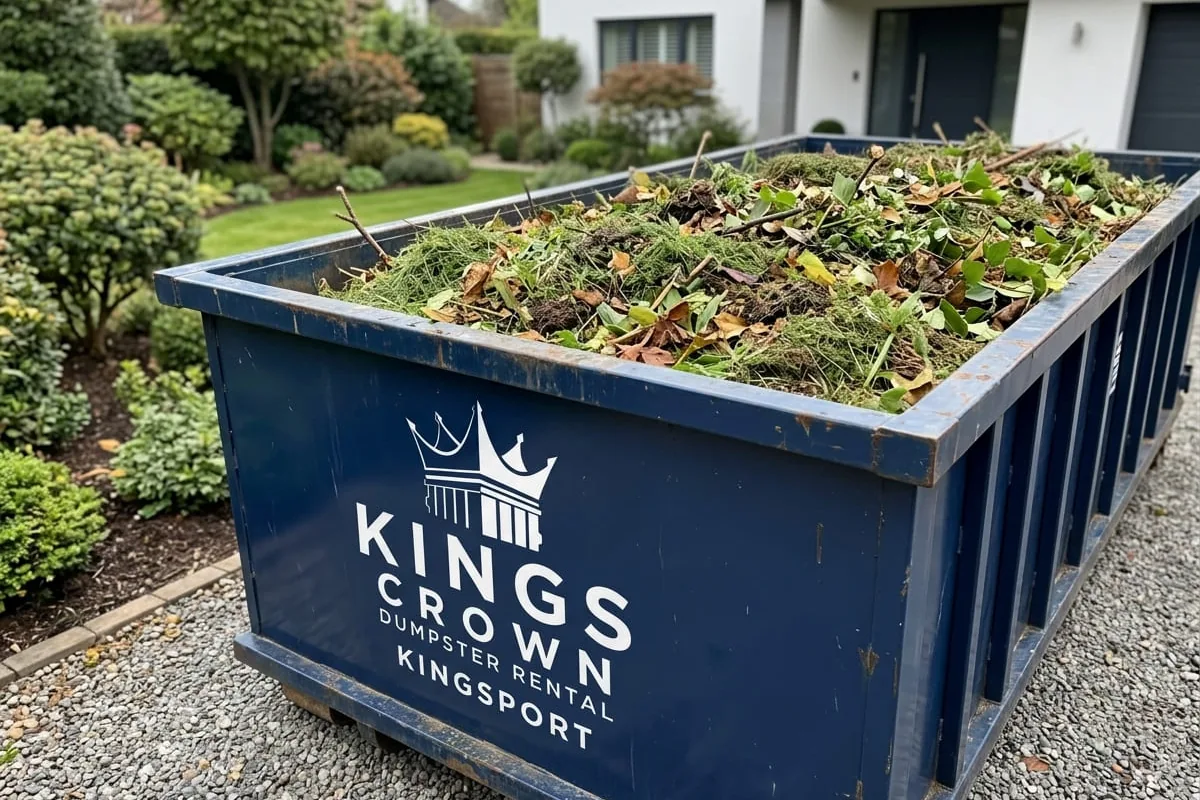
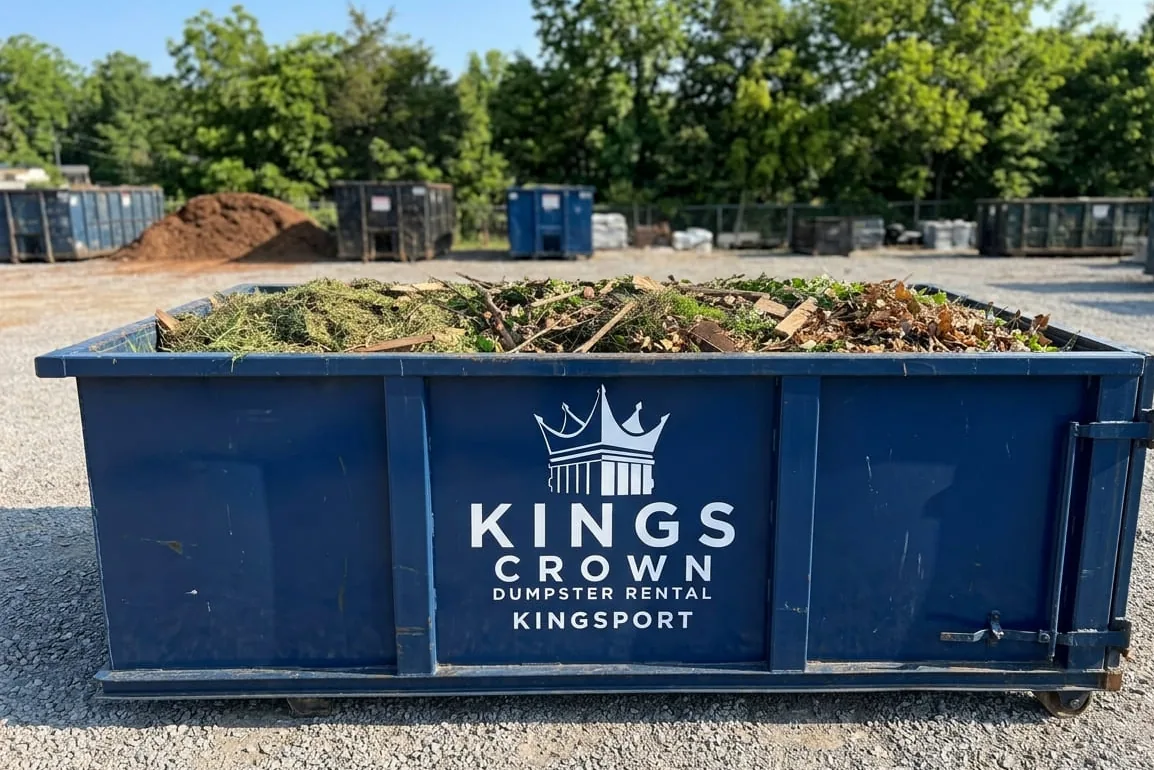
The most expensive habit in storm cleanup is one pile. Clean woody brush — limbs, trunk wood, leafy tops, nothing else — can often be routed to processing that handles vegetative material. The moment a soaked mattress, a bundle of shingles, or window glass lands on top, the whole load becomes mixed debris and is priced as such.
Keep piles separate from the first limb you drag: brush in one place, mixed construction and household debris in another, roofing in a third if a tear-off is coming. Clean concrete, brick, and masonry get their own container. Our guide to what can go in a dumpster in Tennessee covers the categories. Hazardous items — paint, fuel, propane tanks, batteries, pesticides — never go in any container, no matter how the storm mixed them together.
Flood-Damaged Contents Are Not an Ordinary Cleanout
Weight. Saturated material can weigh several times what it weighs dry. Carpet and pad two people carried in dry may take four to carry out wet. Wet drywall, soaked insulation, waterlogged furniture, and mud hit tonnage limits long before they fill the box — a 20-yard that looks two-thirds empty can already be at its weight allowance. Order by weight, not volume.
Time. Mold does not wait for your schedule. The rule after flooding is to dry the structure fast and get porous material out quickly. The EPA's mold guidance notes that porous materials such as carpet and ceiling tiles often have to be discarded once moldy, because growth embeds where cleaning cannot reach, and advises professional help for larger contaminated areas.
Restoration crews cut drywall out above the visible water line — a flood cut — because wicking pulls moisture higher than the stain suggests and insulation behind it holds water indefinitely. Carpet, pad, particleboard furniture, mattresses, and cardboard-backed goods generally go; solid wood, metal, and hard surfaces can often be dried and saved. If sewage or river water was involved, treat everything porous as contaminated and wear real protection: N95 or better, gloves, eye protection, boots.
Ice Storms, Hung-Up Limbs, and Trees Under Tension
Ice events are the region's quiet destroyer. A quarter inch of accretion loads mature oak, hickory, and poplar limbs enormously, and failures often come hours after the freezing rain stops.
The dangerous work is not the limb on the ground. It is the limb that broke but never fell — hung up in the canopy, resting on a wire, held by a strip of bark — and the bent sapling or split trunk holding stored energy. A tree under tension releases in a direction you cannot predict, a spring pole can throw a person or a saw, and a hung-up limb can drop while you stand under it working.
Be honest about the line. Ground-level cutting of limbs already down, at rest, and clear of any wire is homeowner work if you are trained on the saw and wearing chaps, eye and ear protection, and gloves. Anything overhead, hung up, under tension, against a structure, or near a power line is for an insured professional with a bucket truck and rigging. Line clearance is the utility's job — call them. Chainsaw injuries and ladder falls spike after every regional storm.
Roof Damage Triage and Tarping
Wind and hail damage is not always obvious. Look for missing or lifted shingles, granule loss piling at downspout outlets, bruised shingle surfaces, damaged ridge caps, and bent flashing or vent boots. Inside, check attic sheathing for daylight and ceilings for fresh staining.
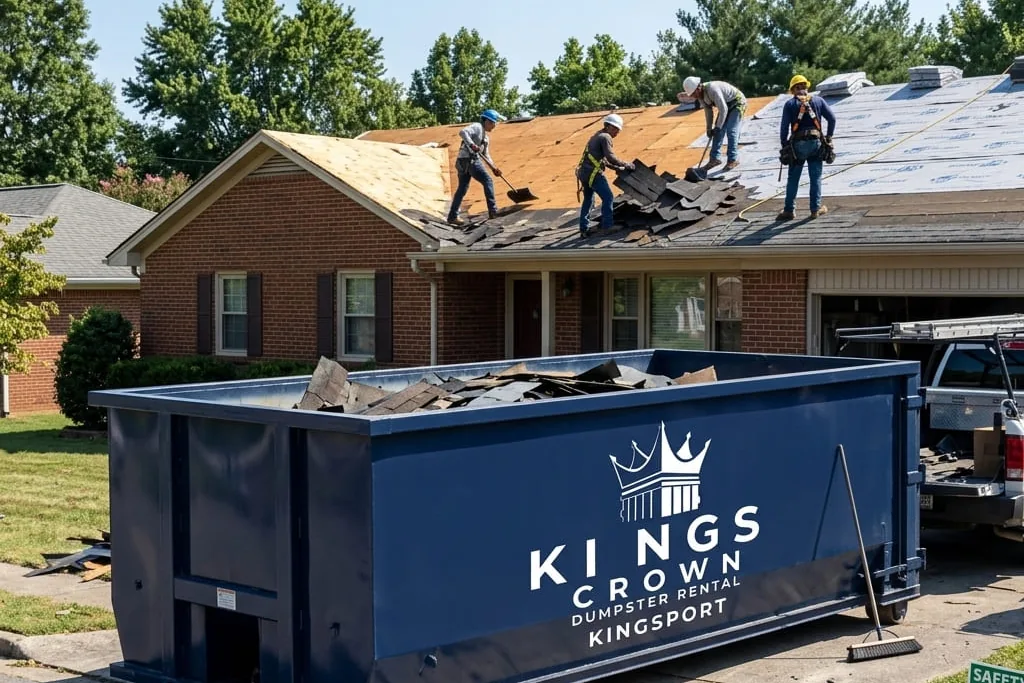
Inspect from the ground with binoculars, or hire a roofer. Storm-damaged roofs have soft decking, hidden holes, and slick debris. Tarping is emergency mitigation your policy likely expects — but it is still roof work, and still safer paid out. At tear-off, shingles need their own container; roofing debris is dense enough that a smaller box at partial fill is usually right. See tear-off sizing and our roofing dumpster service.
Why Containers Get Scarce After a Regional Event
A widespread storm does not create demand in one neighborhood. It creates demand across Sullivan, Hawkins, and neighboring counties at once, and every hauler in the Tri-Cities draws from a finite pool of boxes and trucks. Disposal sites queue up, and roll-offs that turn over in a day normally sit for a week.
So call early, before you know your exact volume. A container booked on day one and delivered on day three beats a perfect estimate you cannot fill for two weeks. Stay flexible — if the 20-yard is committed, a 30-yard or two smaller boxes moves your project now. Stage debris where a truck can reach it: driveway clear, no low limbs over the drop zone, nothing boxing in the placement.
What Municipal Storm Collection Does and Doesn't Cover
Kingsport runs a brush and yard waste collection program, and after major events municipalities here sometimes add temporary storm-debris pickup. It is a real resource, worth using for the material it accepts.
The limits are where people get stuck. Curbside programs typically cap limb length and volume per pickup, exclude contractor-generated debris, and may bill for certain items. They are not built for a whole-house flood cleanout or a roof tear-off. Rules and fees change, and post-storm collection is announced event by event — confirm current rules with your own municipality. Kingsport residents can check the city's site; in unincorporated Sullivan or Hawkins County, call your county solid waste office. A container wins when you have volume, mixed material, anything curbside will not take, or a wet pile you cannot leave at the street.
Sizing for Storm Debris
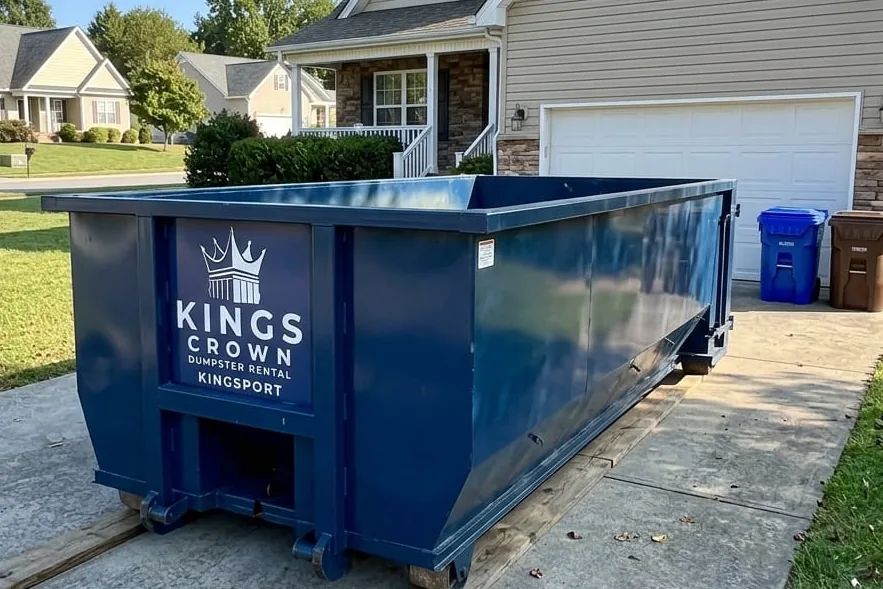
Our containers and their included tonnage: 10-yard 1–2 tons, 15-yard 2–3 tons, 20-yard 3–4 tons, 30-yard 4–5 tons, 40-yard 5–6 tons. For storm work, weight matters more than on a normal cleanout. Wet brush, soaked contents, mud, root balls, and shingles all run heavy, and a pile rained on for three days weighs far more than it did dry. Saturated material is always heavier than it looks.
Mixed dry storm debris from a single-family home usually lands in a 20-yard. Flood contents from a finished basement often need a 30-yard, with a hard eye on tonnage. Brush from a few large limbs fits a 15-yard. Tell us what fell and what got wet.
We deliver across Kingsport, Sullivan County, and Hawkins County. Call (423) 830-4153 or reach us here — and if a storm is in the forecast, calling before the wind arrives is the best thing you can do.
Kings Crown Dumpster Rental
Written by the team that runs the trucks out of our yard on 2009 Independence Way in Kingsport. We have been hauling
roll-offs across Sullivan County and upper East Tennessee since 2014. Questions about your own job?
Call (423) 830-4153.
Talk to a real person
Ready to book a container in Kingsport?
Call and describe the job. Flat price, stated tonnage, and a delivery time on the same call.
Should I photograph storm damage before I start cleaning up?
Yes, and it matters more than most people realize. Once debris is moved you cannot recreate the scene, and insurers generally want to see extent and cause together. Take wide shots of the whole structure, then mid-range and close-up images of each damaged area, the tree where it fell, water lines on walls, and damaged contents in place. Keep receipts for tarps and hauling, and ask your adjuster whether anything must stay put.
Why should I keep brush separate from other storm debris?
Clean woody material with nothing mixed in can often be routed to processing that handles vegetative debris. Add one soaked mattress, a bundle of shingles, or broken glass and the whole container becomes mixed debris, priced and disposed of accordingly. Separating piles from the first limb you drag costs nothing and can meaningfully change what the load costs. Keep brush, mixed storm debris, roofing, and clean masonry in distinct piles.
What size dumpster do I need for flood-damaged contents?
Usually a 20-yard or 30-yard, but size it by weight rather than volume. Saturated carpet, pad, drywall, and insulation weigh several times their dry weight, so a container can reach its tonnage allowance while it still looks partly empty. Our 20-yard includes three to four tons and the 30-yard four to five tons. Tell us what got wet and how much finished space is involved and we will size it properly.
Can I cut up a tree that fell on my house myself?
No. Anything resting on a structure, hung up in a canopy, bent under tension, above ground level, or near a power line is work for an insured tree professional with proper rigging. Trees under tension release unpredictably and hung-up limbs drop without warning. Ground-level cutting of limbs already fully at rest and clear of wires is reasonable with training and protective gear. For downed lines, call your utility and stay well back.
Why are dumpsters hard to get after a big storm here?
A widespread event creates demand across Sullivan, Hawkins, and neighboring counties at the same time, and every hauler in the region draws from a limited pool of containers and trucks. Boxes sit longer on job sites because everyone is working at once, and disposal sites back up. Call early, before you have an exact volume figured out, and stay flexible on size. A container you can fill this week beats a perfect estimate you cannot.
Running waste on an active jobsite is a scheduling problem, not a trash problem. Here is how Kingsport contractors size roll-off containers by build phase, keep heavy debris separate from light bulky debris, and plan access so a full box never stops a crew.
Clearing a parent's house is not a weekend job, and treating it like one produces regret. Here is a paced estate cleanout plan for Kingsport families: the documents pass that comes before anything moves, where people hide things, handling medications and firearms, the four-pile method with room for undecided, and how to stage containers in stages.
Shingles are heavy, flat and dense, so the container that looks big enough is usually the wrong one. Here is how to count squares, allow for hidden second layers, and match a Kingsport roll-off to tonnage instead of cubic yards.